
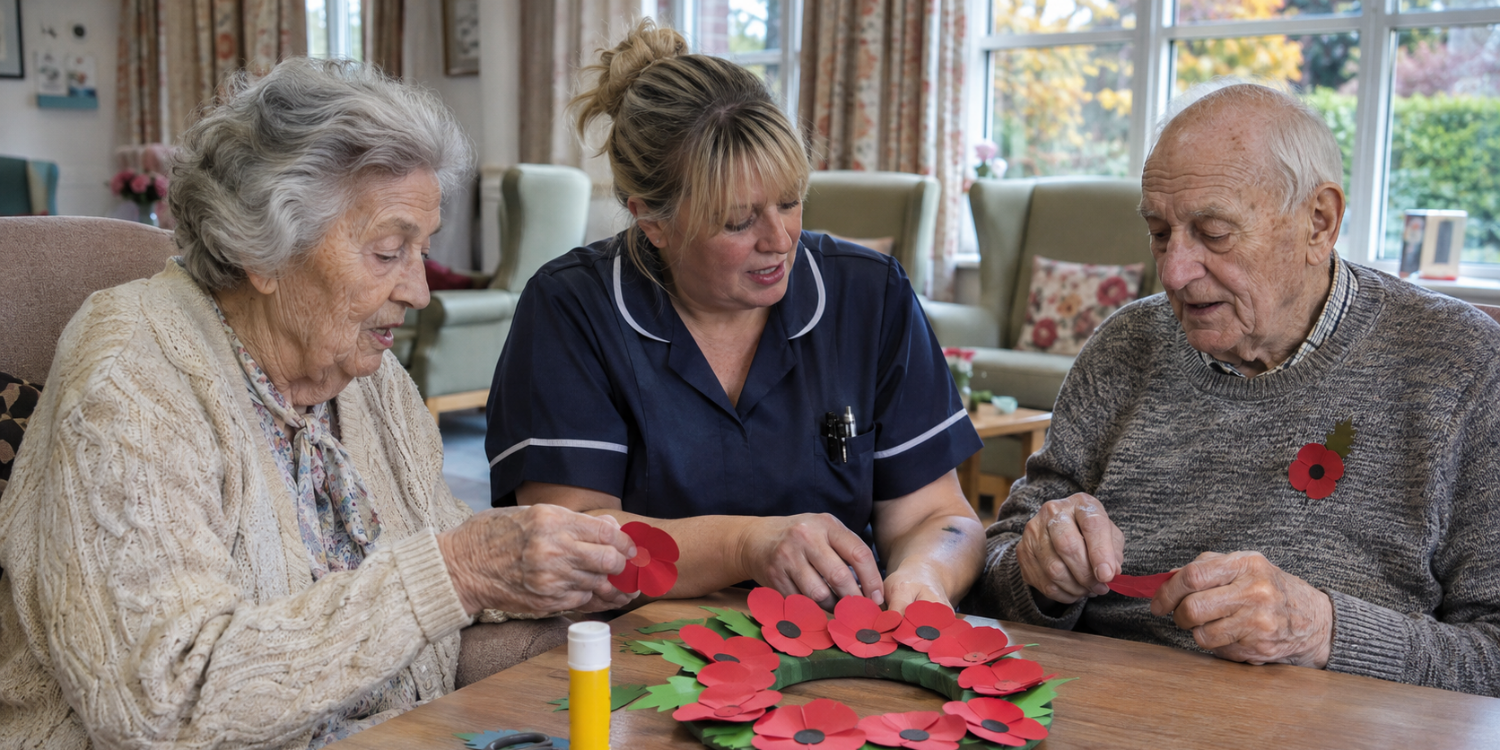
Poppy making is an annual tradition at RDCP
Today is the 11th of the 11th, and at 11 am, the nation will pause across the UK. In our homes, that pause carries a particular weight. For many of our residents, Remembrance Day is more than a date on the calendar. It is personal.
Why Remembrance matters so much to our residents
Many of the people we care for grew up in the shadow of the Second World War, and some were children when it ended. They remember the rationing, the evacuations, the sirens and the stories of those who did not come home. Others have spent their lives close to the Armed Forces, as National Servicemen, as wives and mothers waiting for letters, or as sons and daughters of those who served. Even for residents with no direct connection, Remembrance has been a fixed point in the year for as long as they can recall, marked at school, in church, at the war memorial and around the radio or television.
That is what makes it so powerful. Remembrance carries a lifetime of memories, and taking part connects our residents to their own history, their communities, and the generation that came before them.
A little history
The date was chosen because the guns fell silent at 11am on 11 November 1918, bringing the First World War to an end. The red poppy became the symbol of Remembrance after the poem In Flanders Fields, written by John McCrae in 1915, described poppies growing across the battlefields. The Royal British Legion held its first Poppy Appeal in 1921, and the tradition has continued ever since, supporting serving and former members of the Armed Forces and their families. Today, the nation observes a two-minute silence at 11 am on 11 November, as it did on Remembrance Sunday.
How we mark the day in our homes
Every home marks Remembrance in its own way, but some lovely traditions run through them all.
Poppy making. In the days leading up to 11 November, residents get stuck into making poppies from crepe paper, felt, wool and card. It is a wonderful activity for hands, and for conversation too. Many residents find the familiar, tactile craft calming, and the finished poppies make beautiful displays and wreaths for our homes and gardens.
Reminiscence. Sitting together over a cup of tea, looking at old photographs, listening to wartime songs and sharing stories is one of the most meaningful parts of the day. Memories of dances, ration books, family members in uniform and the day the war ended come flooding back, and our teams love listening. For residents living with dementia, long-term memories often remain remarkably vivid, and reminiscence can bring comfort, confidence and real joy.
The two-minute silence. At 11 am, residents, staff and visiting families come together to pause. Some choose to wear their medals or regimental badges with pride. For some it is a moment of quiet reflection, for others a chance to think of a particular person, and all are supported in whatever way feels right for them.
Music, readings and displays. Familiar hymns, wartime songs and the words of Remembrance, including the Ode of Remembrance, are shared, and many homes put together displays of photographs, medals and keepsakes that residents or their families have brought in.
Looking outwards. Where possible, we invite local veterans, schools and community groups to join us, and some of our residents lay a wreath or take part in local services. It is a lovely way to stay connected to the communities they have always belonged to.
Looking after emotions with care
Remembrance can stir up powerful feelings, from pride and gratitude to sadness and loss. Our teams know our residents well, and we offer gentle support throughout. We never push anyone to take part, but we make sure everybody who wants to is included, and that anyone who finds the day difficult has a quiet space and a friendly face nearby.
Honouring the past, together
Remembrance reminds us that every life has a story, and that our residents are part of the history that so many of us learn about in books. By taking the time to remember together, we honour those who served and those who were lost, and we give our residents the chance to feel valued, heard and connected.
They shall grow not old, as we that are left grow old:
Age shall not weary them, nor the years condemn.
At the going down of the sun and in the morning
We will remember them.

Find out more
If you would like to talk to someone about the types of care on offer here at RDCP Care, please click the button below and request a call back from our team.
Follow us
Want to see more of life at RDCP Care? Follow us on Facebook for the latest news, updates, behind-the-scenes moments, activities, events, and all the things happening across our homes.